
9 Reasons Why Your Garage Door Won't Close? — How to Fix?
Statewide across Arizona. A person answers 6am–10pm, six days a week, and we quote before we start.

Start here
What is your door doing?
Pick the closest one. We will carry it into the booking so you do not have to explain it twice.
Heat is what breaks garage doors in Arizona
A closed garage in an Arizona summer runs hotter than the street outside. Steel springs fatigue faster hot, the grease on the track thins, and the opener pulls against a door that has grown a fraction wider than it was in January. It is why springs fail in clusters here every summer, and why a door that sounds slightly wrong in May is usually a door that fails in July.
By the numbers
Why people call us
520 reviews, averaging 5.0 out of 5
Sir was very nice, explained it to me so many times because I didn’t understand and not once did he get mad or frustrated, definitely recommend!
Joe and his crew did an amazing job replacing our garage door. From the beginning the showed up on time and answered all my questions and provided a detailed estimate, which was very reasonable. They
Joe was awesomwe.Came out within 30 minutes and was done all within an hour.Gave us military discount. We live in Scottsdale Az.Highley recommend.
Why people in Arizona call us back
Six reasons that hold up to being checked — no award badges, no numbers nobody can verify.
Same-day, six days
6 AM to 10 PM, Sunday through Friday. Most calls are closed the day they come in.
Three Phoenix-metro yards
Mesa, Phoenix and Tempe, carrying springs, openers and panels for the doors actually fitted here.
Licensed under ROC 346767
Bonded and insured. The licence number is on every invoice and you can look it up.
Priced before work starts
You see the figure on site, in writing, and you can decline it.
Rated 5.0 across 520+ reviews
Across all three locations, from customers who let us in the first time.
Statewide coverage
Every city in Arizona, not only the twenty with a page on this site.
What that means on the day
Springs are the usual culprit
Arizona heat cycles a torsion spring harder than almost anywhere else. We stock them.
We carry the parts on the van
Openers, rollers, cables, panels — so most visits are one visit.
Straight answers on old doors
If a repair is the better buy, we will say so rather than sell you a replacement.
Emergency cover after hours
Outside 6 AM to 10 PM we still dispatch on a next-two-hours window.
Parts and brands we carry
Genuine parts ride on the van, so most calls finish on the first visit instead of waiting on an order.
How it works
Three steps, no surprises
-
01
Give us a call
Tell us what the door is doing. We answer 6am–10pm, six days a week — a person, not a queue.
-
02
Pick a 2-hour window
Emergency means the next two hours. Otherwise choose a window that suits you, today or later in the week.
-
03
Free on-site estimate
We quote before we start. You approve the price first — no hidden fees, no surprise on the invoice.
A technician at your door
in the next two hours
Broken spring, door stuck open, car shut in. Call and we dispatch from the nearest yard — anywhere in Arizona.
statewide
What a call-out includes
We come out
No call-out fee anywhere in Arizona, and no charge to diagnose.
You get the price
In writing, on site, once a technician has seen the actual door.
You decide
Say no and we leave. Nothing charged, nothing started.
Six days a week
6 AM to 10 PM, Sunday through Friday. Not a 9-to-5 answering service.
Licensed, bonded and insured under ROC 346767. The estimate is given before any work starts, and you are free to decline it.
On the ground
Working across Arizona
Three locations across the Phoenix metro — Mesa at 125 S 56th St; Phoenix at 600 N 53rd St Unit 44; Tempe at 9855 S Priest Dr Ste 102 Room #1 — and vans that travel the whole state. Springs, rollers, cables, sensors and the common opener boards ride with the technician, so most calls finish on the first visit rather than waiting on an order.
We answer from 6am, which in summer is the only sensible time to work on a door, and run until 10pm six days a week. Emergency means the next two hours — a car shut in, or a door that will not close and cannot be left.
Our work
Recent work in Arizona
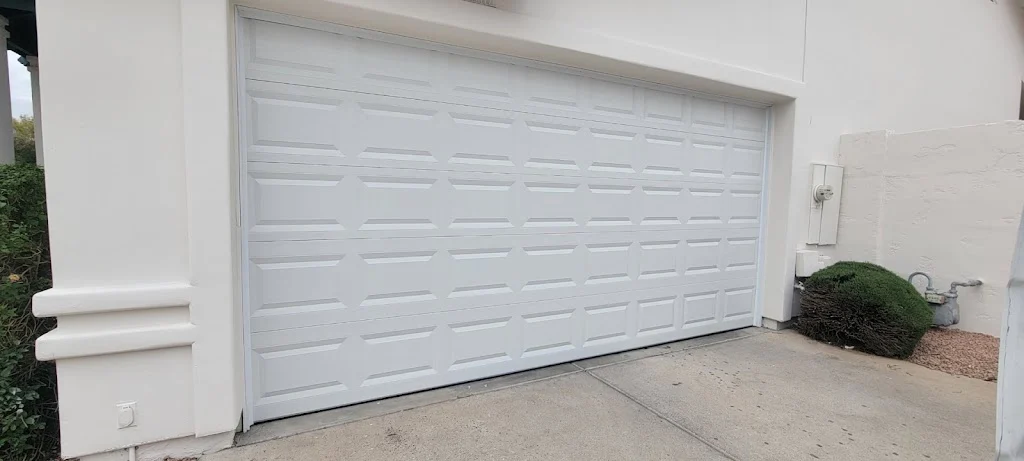
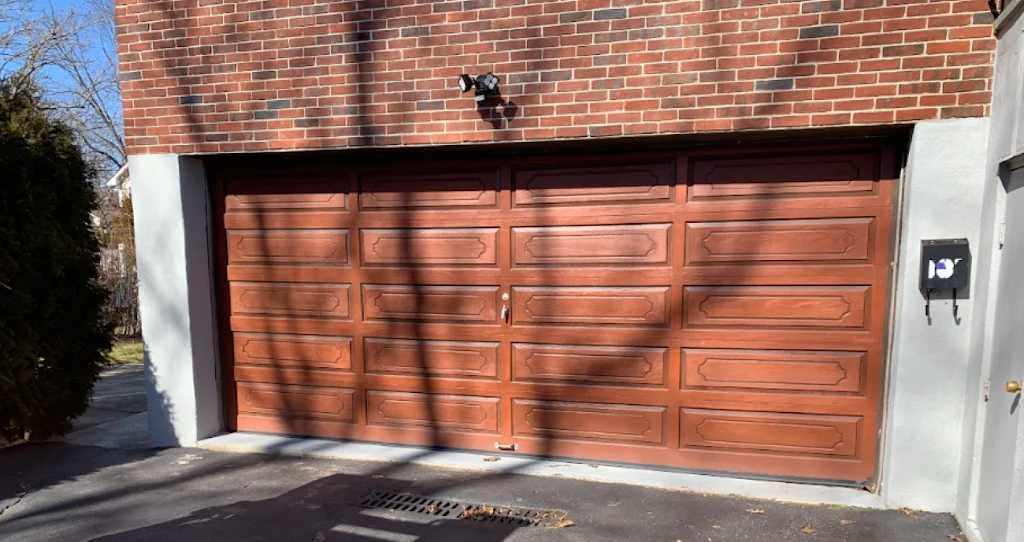
Doors we have replaced, repaired and installed across the Valley. Every one of these was a real job for a real customer.



Service area
Where we work
We cover every city in Arizona. Three locations across the Phoenix metro, and we travel statewide — if you are in Arizona, we come to you. The cities below are simply the ones with a page of their own.
Phoenix
Garage door repair in Phoenix, AZ
Mesa
Garage door repair in Mesa, AZ
Scottsdale
Garage door repair in Scottsdale, AZ
Tempe
Garage door repair in Tempe, AZ
Chandler
Garage door repair in Chandler, AZ
Gilbert
Garage door repair in Gilbert, AZ
Glendale
Garage door repair in Glendale, AZ
Peoria
Garage door repair in Peoria, AZ
Surprise
Garage door repair in Surprise, AZ
Goodyear
Garage door repair in Goodyear, AZ
Avondale
Garage door repair in Avondale, AZ
Buckeye
Garage door repair in Buckeye, AZ
Maricopa
Garage door repair in Maricopa, AZ
Queen Creek
Garage door repair in Queen Creek, AZ
Apache Junction
Garage door repair in Apache Junction, AZ
Fountain Hills
Garage door repair in Fountain Hills, AZ
Sun City
Garage door repair in Sun City, AZ
Sun City West
Garage door repair in Sun City West, AZ
El Mirage
Garage door repair in El Mirage, AZ
Florence
Garage door repair in Florence, AZ
Also serving Paradise Valley, Litchfield Park, Tolleson, Wickenburg, Coolidge, Eloy, Carefree, Anthem, Casa Grande, Gold Canyon, Ahwatukee, Cave Creek — and everywhere else in the state. Not listed? call (480) 485-0575 and we will tell you straight away.
Tell us what it is doing
A person answers, 6am–10pm, six days a week. We will tell you honestly whether it needs a technician today or whether it can wait.
Everything else about garage doors in Arizona
Read more
Having a garage door that won't close properly can be extremely frustrating. Not being able to securely close your garage door leaves your home and belongings vulnerable and can make your garage unusable. There are several reasons why your garage door may not be closing properly, from broken springs and opener issues to sensor obstructions and track problems.
/wp:paragraph wp:paragraphIn this comprehensive guide, we'll discuss common reasons a garage door fails to close, how to troubleshoot and fix the issue yourself, when to call a professional, and tips for preventing problems in the future. Whether your door only closes partially or won't close at all, this guide will help you get your garage door functioning properly again.
/wp:paragraph wp:headingUnderstanding Garage Door Issues
/wp:heading wp:paragraphBefore diving into reasons why your garage door won't close, it helps to have a basic understanding of how garage doors and openers operate.
/wp:paragraph wp:paragraphGarage doors utilize springs, pulleys, cables, tracks, and openers to open and close. When working properly, the garage door opener activates and sends power to lift the door up and down on the track. Sensors on both sides of the door detect obstructions and signal the opener to stop and reverse if something is blocking the door's path.
/wp:paragraph wp:paragraphIf any of these components are broken, out of alignment, or obstructed, it can prevent the door from fully closing. Some common parts of a garage door system that impact its ability to open and close include:
/wp:paragraph wp:heading {"level":3}Garage Door Limit Settings
/wp:heading wp:paragraphThe limit settings control how far your garage door opens and closes. If these settings are off, it will prevent the door from fully closing or opening.
/wp:paragraph wp:heading {"level":3}Garage Door Springs
/wp:heading wp:paragraphTorsion springs provide counterbalance to offset the door's weight, making it easy to open and close. Broken springs prevent proper balancing.
/wp:paragraph wp:heading {"level":3}Garage Door Track
/wp:heading wp:paragraphThe metal track guides your door up and down. Bent or misaligned tracks can cause rollers to get stuck.
/wp:paragraph wp:paragraphUnderstanding how a garage door functions helps pinpoint issues when the door fails to close properly. If one component is damaged or misaligned, it affects the entire system.
/wp:paragraph wp:heading
Common Reasons Why Your Garage Door Won't Close
Read more
There are a number of possible reasons why your garage door won't close all the way. Here are some of the most common causes:
/wp:paragraph wp:heading {"level":3}Issues with the Garage Door Opener
/wp:heading wp:paragraphAs the device that powers and controls the opening and closing of your door, any issues with the garage door opener will prevent proper operation.
/wp:paragraph wp:list- Opener motor problems - If the motor is making loud noises, vibrating excessively, or lacks power, the motor may be wearing out or have an internal issue. This can cause the door to not have enough power to fully close.
- Logic board failure - The logic board controls the opener's motor and other electronic components. If it malfunctions or shorts out, it can lead to intermittent or complete failure to open or close.
- Gear or sprocket issues - These allow the opener motor to drive the cable pulley. Broken, worn, or slipped gears can cause the door to not fully close.
- Limit and sensor issues - Improperly set limits and malfunctioning sensors that prevent the opener from closing fully.
- Opener disengaged - Garage door openers have a manual release to disengage the trolley from the door. If pulled, the door will no longer automatically open or close.
- Loss of power - Check power source and wiring connections. A power outage or tripped breaker can disrupt power to the opener.
Garage Door Opener Motor
/wp:heading wp:paragraphAs mentioned, any issue with the opener's motor can prevent the door from opening and closing properly. Binding, jamming, seized, broken, or worn out motors will not have the power to open and close the heavy door. Signs of motor problems include loud noises, vibrating, intermittent function, or the motor not running at all.
/wp:paragraph wp:heading {"level":3}Garage Door Remote
/wp:heading wp:paragraphThe remote serves as the control to open and close your door from a distance. If your remote has dead batteries, is damaged, or unprogrammed, it will fail to send the signal needed to operate the motor. Your remote may need reprogramming or replacing if it fails to close your door.
/wp:paragraph wp:heading {"level":3}Limit Switch Problems
/wp:heading wp:paragraphThe opener's limit switches control how far the door travels in the open and closed position. If these are improperly adjusted or defective, it can stop the door from fully closing. You'll notice the motor running but the door not moving. Inspect the limit switches if your garage door closes but reverses and opens again before shutting.
/wp:paragraph wp:heading {"level":3}Sensor Obstruction
/wp:heading wp:paragraphAll garage door openers have safety sensors that prevent the door from closing if there is an obstruction in the path. The sensors are located near the bottom of each side of the door. If the sensors are dirty, misaligned, or something is blocking the beam, the opener may not receive the signal to close the door fully.
/wp:paragraph wp:image {"id":4351,"width":"283px","height":"auto","aspectRatio":"1","sizeSlug":"full","linkDestination":"none","align":"right"}
Broken Springs
/wp:heading wp:paragraphTorsion springs counterbalance the weight of the garage door, allowing the opener to easily lift and lower the door. Broken or stretched springs do not provide the proper counterforce. This can cause strain on the motor, making in unable to fully open or close the door. If your door is very heavy or difficult to move manually, broken springs could be the issue.
/wp:paragraph wp:heading
How to Troubleshoot and Fix Garage Door Closing Problems?
Read more
If your garage door refuses to close all the way, the issue likely lies with one of the common problems listed above. Here are some steps you can take to troubleshoot and fix the problem:
/wp:paragraph wp:heading {"level":3}Checking the Door for Obstructions
/wp:heading wp:paragraphFirst, check that nothing is obstructing the door's path. Any items stuck in the tracks or blocking sensors can prevent closing. Remove any debris or objects in the door's path and retest operation. Clean any dirt or condensation from the safety sensors.
/wp:paragraph wp:heading {"level":3}Inspecting the Garage Door Torsion Springs
/wp:heading wp:paragraphIt's important to visually inspect the torsion springs above the garage door. Signs that the springs are broken or stretched include sagging at one end, separated coils, or loose hardware. To check springs:
/wp:paragraph wp:list- Carefully and safely detach the opener from the door (use the manual release cord).
- Manually lift and open the door about halfway. A properly balanced door will stay in place when released.
- If the door immediately falls or is very difficult to lift, the springs are likely damaged and need replacing.
Caution: The torsion springs are under extreme tension and can cause serious injury if handled improperly. Call a professional to adjust or replace springs.
/wp:paragraph wp:heading {"level":3}Testing the Garage Door Opener Motor
/wp:heading wp:paragraphThe opener motor should be able to lift and close the door smoothly when disengaged. Test this:
/wp:paragraph wp:list- With the door halfway open, disengage the opener trolley's attachment to the door arm using the manual release cord.
- Try manually moving the trolley - it should smoothly glide back and forth on the rail with minimal resistance.
- If the trolley is very difficult to move or frozen in place, this indicates an issue with the opener motor.
- Plug a lamp into the outlet to ensure power is being delivered to the opener. If not, check wiring connections and circuit breakers.
Signs of a worn out motor include loud grinding noises, vibrating, intermittent motion, or if the motor fails to run at all. A defective motor will need professional replacement.
/wp:paragraph wp:heading {"level":3}Checking Garage Door Limit Settings
/wp:heading wp:list- Press the remote or wall button to close the door. Watch to see if the door fully closes before reversing open again.
- If so, the down limit switch likely needs adjusted slightly to allow full closure.
- Carefully adjust the limit setting according to your opener's manual until the door fully closes without reversing.
Be very careful when adjusting the forces and limits - set them too tight and the door can crush objects or fail to stop and reverse when needed.
/wp:paragraph wp:heading {"level":3}Hiring an Expert Garage Door Technician
/wp:heading wp:paragraphIf you are unable to determine or resolve the issue preventing your garage door from closing, it's best to hire a professional garage door technician. A qualified garage door expert can safely inspect hardware, diagnose problems, make needed adjustments and repairs, replace broken parts, and ensure the door is properly balanced and working optimally.
/wp:paragraph wp:paragraphMake sure any professional garage door repair services are properly licensed, bonded, and insured. Get upfront estimates, warranties, and guarantees for parts and labor. While DIY repairs are possible for minor issues, major components like springs and openers are complex and potentially dangerous for amateurs to handle. Investing in professional garage door repair in Phoenix can save you money and prevent injury in the long run while getting your balky garage door to fully close once again.
/wp:paragraph wp:heading
Tips for Preventing Garage Door Problems
Read more
To avoid winding up with a garage door that refuses to close in the future, here are some maintenance tips for keeping your garage door working smoothly:
/wp:paragraph wp:heading {"level":3}Maintaining Garage Door Springs
/wp:heading wp:paragraphGet torsion springs inspected by a professional every 1-2 years. Have any severely wound or broken springs replaced to maintain proper counterbalancing. Don't attempt to adjust springs yourself.
/wp:paragraph wp:heading {"level":3}Keeping the Door Track Clean
/wp:heading wp:paragraphCheck garage door tracks regularly for dirt, debris, and ice buildup which can obstruct the rollers. Clean the tracks with a damp cloth to remove grime.
/wp:paragraph wp:image {"id":4352,"width":"284px","height":"auto","aspectRatio":"1","sizeSlug":"full","linkDestination":"none","align":"right"}
Checking the Garage Door Opener Motor
/wp:heading wp:paragraphTest that your opener motor is lifting the door smoothly and quietly every month. Lubricate the moving trolley and rail with a small amount of light oil every few months. Replace straining motors before they burn out.
/wp:paragraph wp:heading {"level":3}Replacing Old Remotes and Batteries
/wp:heading wp:paragraphswap out remotes every 2-3 years or anytime they become unresponsive. Always keep fresh batteries in the remote to ensure the strongest signal possible.
/wp:paragraph wp:heading {"level":3}Testing and Adjusting the Auto-Reverse
/wp:heading wp:paragraphMake sure the garage door opener's auto reverse is working properly by laying a 2x4 board flat in the door's path. When the door contacts it while closing, it should immediately reverse open. Adjust down force as needed.
/wp:paragraph wp:heading {"level":3}Fix Minor Alignment Issues
/wp:heading wp:paragraphCatch and fix minor track alignment problems early before they progress into door closing failures. Bring in a pro if you can't close gaps or remedy misalignment.
/wp:paragraph wp:paragraphBy regularly inspecting your garage door components, testing safety features, and calling in technicians for major repairs, you can prevent most problems with the door failing to fully close. Addressing issues early also reduces the likelihood of getting stuck with bigger, more costly repairs down the road. Keep your garage door and opener properly maintained and carefully monitored so it continues reliably opening and closing for years to come.
/wp:paragraph wp:heading
Frequently Asked Questions
Read more
Why is my garage door not closing and going back up?
/wp:heading wp:paragraphThis question is asking about a problem where the garage door starts to close but then reverses and goes back up before shutting fully. Some potential causes include:
/wp:paragraph wp:list- The safety sensors are obstructed or misaligned, causing the door to reverse when it thinks something is blocking the way. The sensors must be cleaned and realigned properly.
- The closing force is set too low, so the door reverses when meeting resistance. The force needs adjusted by a professional.
- The limit settings are allowing the door to close too far before reversing. The down limit needs adjusted slightly.
- There is an obstruction in the door's path that triggers the auto-reverse, like a broken spring or something sticking out. The obstruction needs to be fixed.
How do you reset garage door sensors?
/wp:heading wp:paragraphThis is asking how to reset safety sensors that aren't working right. To reset sensors:
/wp:paragraph wp:list- Make sure sensors are correctly aligned with lights facing each other across the door. Adjust brackets if needed.
- Check for debris blocking the sensors and wipe them clean using a rag.
- Check wiring is intact, secure, and undamaged.
- Disconnect and reconnect the power to reset the opener system.
- Open and close the door to ensure sensors are aligned and working after resetting. The door shouldn't close if you break the beam.
Can you manually close a garage door?
/wp:heading wp:paragraphThis asks if the garage door can be closed manually without power. There are a couple options for manually closing the door:
/wp:paragraph wp:list- Pull the emergency release handle on the opener to disconnect the door from the trolley so it can move freely.
- Lift the door manually up until you can reach the interior locking mechanism. Activate the lock to secure the door closed.
- Some doors have handles installed on the inside to allow you to pull them shut manually from the inside when disengaged from the opener.
- Use the locking mechanism on the door track with the opener disengaged. This locks the rollers in place so the door can't open.
- You can also carefully tie the door down using rope or bungie cords if needed, like during a power outage.
Conclusion
Read more
There are a number of potential reasons why your garage door won't fully close. The most common causes include broken springs, opener problems, bent tracks, sensor obstructions, misaligned components and limit switch issues.
/wp:paragraph wp:paragraphCarefully inspecting the door, testing it manually, and troubleshooting the opener can help pinpoint the issue. Address minor problems quickly before they progress. If the door still won't operate right, call a professional garage door technician to safely diagnose and fix the problem.
/wp:paragraph wp:paragraphWith proper maintenance and repairs when needed, you can get your garage door closing smoothly once again.
/wp:paragraphBook a visit
Get a two-hour arrival window
Tell us what the door is doing and when suits you. We confirm by phone — usually within a few minutes during opening hours.
Would rather talk to someone? Call (480) 485-0575
- Licensed & insured — ROC 346767
- Open 6am–10pm, Sunday to Friday
- Serving the whole state of Arizona